
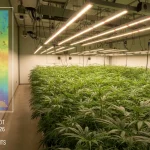
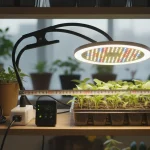
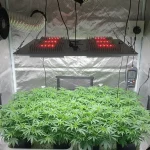
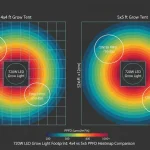
A grow room is a bit like a small theater: your plants are the performers, and the light is the director. When indoor harvests look “okay but not great,” the culprit is often not nutrients—it’s intensity, coverage, heat load, and control. So if you’re choosing between an indoor LED grow light and an HPS setup, the real question is: what wins in your space, with your goals, and your power bill?
As an LED manufacturer (ABEST / ProLEDGrowLight.com) that’s spent 13+ years designing fixtures from 25W to 2000W for tents, vertical farms, and commercial rooms, I’ve watched the same pattern repeat: HPS can still grow great plants, but modern indoor LED grow light systems usually win on total cost, control, and consistency—especially indoors where heat and uniformity decide outcomes.

Quick Verdict: What Wins Indoors (Most of the Time)?
For most indoor growers, an indoor LED grow light wins because it delivers more usable photons per watt, creates less excess heat for HVAC to remove, and offers dimming/spectrum control that helps keep plants compact in veg and productive in flower. HPS still has a place when upfront budget is tight, ambient temperatures are low, and you already have compatible ballasts/reflectors.
Where LEDs pull away fastest indoors is in:
- Operating cost (electricity + cooling)
- Maintenance (no bulb swaps every cycle or two)
- Consistency (uniform PPFD across the canopy, less hotspotting)
- Quality control (spectrum recipes can shift morphology and secondary metabolites)
LED vs HPS Indoors: The Comparison That Actually Matters
The mistake I see is comparing “watts vs watts” or “lumens vs lumens.” For plants, you care about PPF/PPFD (photosynthetic photons) and how evenly they land across the canopy.
Core differences (in plain terms)
- HPS: strong flowering reputation, but higher radiant heat and bulb degradation over time.
- Indoor LED grow light: higher efficacy (µmol/J), more uniform layouts (especially bar fixtures), and better control (dimming, multi-channel, spectrum tuning).
Here’s a practical, indoor-focused breakdown:
| Factor | Indoor LED Grow Light | HPS (High-Pressure Sodium) | What it means indoors |
|---|---|---|---|
| Upfront cost | Usually higher | Usually lower | LEDs cost more initially, but ROI often favors LED |
| Efficiency (µmol/J) | Typically higher in modern fixtures | Lower vs modern LED | More photons per kWh with LED |
| Heat to manage | Lower overall heat load | Higher heat load + radiant IR | Less AC/fan demand with LED |
| Canopy uniformity | Excellent with bar/board layouts | Hotspots under reflectors | Uniform PPFD improves consistency and reduces stress |
| Maintenance | Minimal (cleaning/airflow) | Bulb replacements, reflectors/ballast issues | HPS output drops; bulbs often replaced 6–12 months |
| Control | Dimming + spectrum options | Limited (mostly on/off; some dimmable ballasts) | Control helps seedlings, veg, flower, and cultivar tuning |
| Plant morphology | Can be compact and manageable | Can stretch more | Spectrum affects internode spacing |
| Product quality potential | Often strong, tunable | Can be strong but less tunable | Studies often show equal or better cannabinoid/terpene expression under LED |
Authoritative references for deeper reading:
- Valoya’s HPS vs LED cannabis cultivation summary (morphology and cannabinoid differences by spectrum)
- FOHSE’s LED vs HPS comparison (ROI, control, quality consistency)
- SpecGradeLED LED vs HPS cost/benefit PDF (5-year operating cost framework)
Energy & HVAC: Why LEDs Usually Win Indoors
Indoors, heat isn’t just discomfort—it’s dehumidification load, CO₂ instability, and edge-of-canopy stress. Many growers underestimate how much “lighting choice” becomes an HVAC design choice.
A useful rule cited in cost analyses is that cooling energy can drop when lighting watts drop, because less waste heat enters the room. One 5-year LED vs HPS analysis (commercial scale) shows major kWh differences and quantifies long-run savings when LEDs replace higher-watt HID systems, especially at long photoperiods.

My on-the-ground observation (what I’ve seen in real rooms)
When growers swap HPS to a well-designed indoor LED grow light layout, they often get immediate “environmental relief”:
- Lower peak leaf temps at the top of canopy
- Less cycling on AC/dehu
- Easier RH control during lights-on
- More stable VPD and CO₂ utilization
That stability matters because it keeps plants in a tighter, more predictable growth pattern—especially in multi-tier or tight-tent setups.
Yield and Quality: What Studies Suggest (and What Growers Miss)
Yield isn’t “LED vs HPS” in isolation—it’s photon delivery + uniformity + environment. Controlled comparisons often find LED matches or exceeds HPS when PPFD and coverage are properly set, and some research and industry reporting points to equal or improved cannabinoid/terpene outcomes with LEDs due to spectrum control and reduced stress from excess radiant heat.
A notable spectrum takeaway from research summaries:
- HPS can drive taller plants (longer internodes) due to spectrum balance.
- LED spectra can produce more compact morphology and in some cases higher cannabinoid concentrations compared with HPS treatments, depending on the recipe and cultivar.
If you’ve ever heard “HPS yields more,” it’s often because the LED setup wasn’t optimized—common issues include hanging too high, underpowered fixtures, poor uniformity, or running the same intensity from seedling to flower without dimming.
Choosing the Best Indoor LED Grow Light: A Buyer’s Checklist (No Fluff)
If you’re leaning LED, don’t shop by “equivalent to 1000W HPS” claims. Shop by measurable specs and layout.
1) Match footprint first, then intensity
A strong indoor LED grow light is one that covers your canopy evenly.
- 2×4 / 3×3 tents: look for fixtures designed for that footprint (often boards or compact bars).
- 4×4 / 5×5 tents: bar-style fixtures shine for uniformity.
- Vertical racks: under-canopy and inter-lighting options matter.
2) Look for real performance metrics
Prioritize:
- PPF (µmol/s): total photons produced
- Efficacy (µmol/J): photons per watt
- Driver quality + thermal design: stability over time
- Dimming: essential indoors for seedlings/veg transitions
3) Spectrum: full-spectrum + targeted control beats “one fixed color”
In commercial rooms, we often recommend adjustable or multi-channel control when growers run multiple cultivars or want stage-based recipes. ABEST, for example, builds solutions with spectrum design and smart controls (App/WiFi, multi-channel dimming) for dialing intensity and spectral balance per growth stage.
For a practical refresher on common misconceptions, see our internal guide: LED Lights and Plants: Myth-Busting Indoor Growth Facts.
When HPS Still Makes Sense Indoors
HPS isn’t “dead.” It’s just less forgiving indoors.
Choose HPS if:
- Your upfront budget is the primary constraint
- Your grow space is cold and you need heat as a “feature”
- You already own ballasts/reflectors and can manage bulb schedules
- You don’t need spectrum tuning and you’re experienced dialing environment
Even then, plan for:
- Bulb degradation and replacement cycles
- Higher ventilation/AC demand
- Hotspots and canopy management workload
Practical Setup Tips (Indoor LED Grow Light or HPS)
These reduce mistakes more than brand changes.
-
Measure PPFD (or at least use a reliable light meter approach)
Even canopy PPFD prevents airy corners and top-cola stress. -
Start higher, then dial in
With an indoor LED grow light, photo-bleaching can happen if intensity is too high too soon. Raise fixtures and dim up gradually. -
Treat lighting and HVAC as one system
If you reduce watts (LED), you may need to adjust:- Dehumidification timing
- Heater usage in lights-off
- Fan speeds for stable VPD
-
Keep fixtures clean and airflow steady
Dust and poor heat sinking reduce real output over time—especially in humid rooms.
11 Best LED Grow Lights for 2025 | Ultimate 4’x4′ & 5’x5′ Guide
ABEST/ProLEDGrowLight.com Perspective: What We Build for Indoor Wins
Over years of ODM projects, the highest-performing indoor rooms usually share three traits: uniform light, repeatable recipes, and tight environmental control. That’s why many modern facilities move toward bar-style indoor LED grow light systems, under-canopy lighting to reduce lower-site loss, and smart dimming to keep PPFD exactly where the crop needs it.
If you’re planning a larger facility, it helps to benchmark suppliers and project capability—not just fixture specs. This internal overview may help: Top LED Grow Light Firms for Large Ag Projects.
Conclusion: Which Wins Indoors?
If your indoor space is like most—limited cooling headroom, rising electricity costs, and a need for consistent results—an indoor LED grow light usually beats HPS on total performance. HPS can still produce strong harvests, but it asks you to “pay” in heat management, bulb maintenance, and lower control. Indoors, control is profit.
If you’re deciding between an indoor LED grow light layout (bars/boards/under-canopy) and an HPS retrofit, tell us your grow size and target crop, and we’ll suggest a practical lighting approach you can actually run day to day.
📌 grow smarter not harder the led grow light bar that actually works
FAQ: Indoor LED Grow Light vs HPS (People Also Ask)
1) Are LED lights good for indoor growing?
Yes—purpose-built indoor LED grow light fixtures are among the best options because they deliver high photon output with lower operating cost and less heat, while offering dimming and spectrum control.
2) What are the disadvantages of LED grow lights?
The main downside is higher upfront cost. Also, low-quality “regular LEDs” (not true grow fixtures) may have weak spectrum/PPFD and poor thermal design, which hurts growth and reliability.
3) Do grow lights run up your electric bill?
They can, but LEDs typically reduce cost versus HPS for similar canopy PPFD. Savings often increase further because HVAC demand is usually lower with LED.
4) Is HPS better for flowering indoors?
HPS has a long track record in flowering, but modern indoor LED grow light systems commonly match or beat HPS yields when PPFD and uniformity are done right—and they add spectrum control for quality tuning.
5) What is the best LED indoor grow light?
“Best” depends on canopy size, target PPFD, and whether you need dimming/spectrum control. Look for verified PPF/efficacy, an appropriate footprint, quality drivers, and a strong warranty/support channel.
6) What plants grow best under LED grow lights?
Most plants can thrive under an indoor LED grow light when intensity and photoperiod match the crop—seedlings, leafy greens, herbs, orchids, and fruiting plants all respond well with proper PPFD and coverage.
7) Are grow lights good for peace lilies?
Peace lilies prefer lower to moderate light. Use a dimmable indoor LED grow light, keep it higher above the canopy, and avoid excessive intensity that can bleach or scorch leaves.