
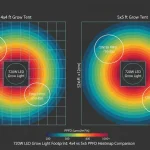
Buying from an LED grow light depot can feel like walking into a giant warehouse with a clipboard: hundreds of fixtures, endless specs, and a nagging question—which numbers actually matter for your plants and your power bill? I’ve helped growers size lights for everything from a single shelf of herbs to multi-room builds, and the same mistakes show up every year. In 2026, the best “deal” is rarely the cheapest light—it’s the light that hits target PPFD evenly, stays cool and stable, and is backed by real support. This checklist will help you shop any LED grow light depot with confidence, whether you’re a home grower or buying in bulk.

What “LED Grow Light Depot” Shoppers Should Prioritize in 2026
A typical LED grow light depot carries dozens of brands and form factors—boards, bars, under-canopy fixtures, and smart-controlled units. That variety is good, but it also makes it easy to compare the wrong things, like “equivalent watts” or blurbs like “full spectrum” with no data. In practice, your best outcome comes from matching your canopy to measurable lighting metrics and reliable hardware.
Here’s the high-level order I use when auditing a shopping cart:
- Coverage + uniformity first (PPFD map across your footprint)
- Efficacy second (µmol/J and total PPF)
- Thermals + driver quality third (long-term output stability)
- Controls + dimming next (0-10V, daisy chain, app/WiFi when useful)
- Certifications + warranty last (but never skip them)
For indoor gardeners, you’ll feel the difference as fewer “weak corners,” less stretching, and more consistent flowering across the entire canopy.
Step 1: Measure Your Grow Space Like an Installer (Not a Shopper)
Most returns start with one mismatch: the fixture was sized for a different footprint. Before you buy from an LED grow light depot, measure:
- Flowering footprint (not veg footprint)
- Ceiling height (affects hanging distance and uniformity)
- Ventilation capacity (drivers and diodes still create heat)
- Plant count and training style (SCROG vs. tall plants changes needs)
I tried “oversizing” a fixture in a low tent years ago, thinking I’d dim it down and win on efficiency. What happened was predictable: hot spots, tight headroom, and more time chasing canopy distance than actually growing. Getting footprint and hanging height right saved more yield than chasing an extra 0.1 µmol/J.
Step 2: Use 2026 Wattage + PPFD Targets (Then Verify With a PAR Map)
Wattage is a starting point, not the finish line. A common rule is 30–40W of actual draw per square foot, but PPFD at canopy is the real target. For flowering, many growers aim for 600–900 µmol/m²/s average PPFD, then adjust based on crop, CO₂, and cultivar response.
Use this sizing table as a baseline when shopping an LED grow light depot:
| Grow Space (approx.) | Typical Flower Wattage Range (Actual Draw) | Target Avg PPFD (Flower) | What to Look for in Listings |
|---|---|---|---|
| 2′ x 2′ (0.6 x 0.6m) | 100–200W | 600–900 µmol/m²/s | Compact board or 2–3 bar mini |
| 2′ x 4′ (0.6 x 1.2m) | 200–350W | 600–900 µmol/m²/s | Longer bar/board with even edge PPFD |
| 3′ x 3′ (0.9 x 0.9m) | 250–450W | 600–900 µmol/m²/s | Multi-bar or wide board for spread |
| 4′ x 4′ (1.2 x 1.2m) | 300–500W | 600–900 µmol/m²/s | “Spider”/multi-bar style for uniformity |
| 5′ x 5′ (1.5 x 1.5m) | 650–800W | 600–900 µmol/m²/s | Commercial bar fixture or multiple lights |
Two non-negotiables when comparing models:
- PPF (µmol/s) tells you total photons produced.
- PPE / efficacy (µmol/J) tells you how efficiently power becomes PAR.
Many 2026-quality fixtures land at 2.5 µmol/J or higher. If two lights have similar PPF, pick the one with better uniformity and a stronger driver/warranty package.

Step 3: Read PAR Maps Like a Pro (Uniformity Beats Peak Numbers)
A smart LED grow light depot listing includes a PAR/PPFD map at a stated height. Don’t be distracted by one big center number—your corners matter, because plants live at the edges too.
When reviewing a PAR map, check:
- Test height (e.g., 12″, 18″, 24″)—short heights can hide poor spread
- Average PPFD across the footprint, not just maximum
- Corner drop-off (big gaps mean airy corners and uneven ripening)
- Hotspot risk (too intense in the center can cause light stress)
In 4′ x 4′ spaces, multi-bar fixtures usually win because diode spread reduces hotspots and raises edge PPFD. This aligns with what many 2026 buyer guides recommend: bar-style designs for uniform canopy coverage in mid-to-large tents and rooms.
Step 4: Spectrum in 2026—“Full Spectrum” Isn’t Enough
Spectrum marketing got cleaner, but “full spectrum” is still vague. For most crops, modern white-based LEDs with targeted deep red perform well, and some fixtures add far-red or UV supplementation. The key is matching spectrum to the crop and stage without paying for features you won’t use.
A practical spectrum checklist:
- Seedling/clone: gentle intensity, stable dimming, cooler whites can be helpful
- Veg: balanced white with adequate blue for tighter internodes
- Flower: added deep red commonly supports flowering intensity and morphology
- Supplemental UV/far-red: useful in some strategies, but requires experience and discipline
If you’re unsure, start with a high-quality full-spectrum fixture and learn your plant response before adding advanced spectral channels. For myth-busting what LEDs can and can’t do, see LED Lights and Plants: Myth-Busting Indoor Growth Facts.
Step 5: Controls & Dimming—Convenience, Consistency, and Scale
In 2026, dimming is not optional—it’s risk management. Being able to lower intensity helps you:
- acclimate new plants,
- prevent light stress in tight headroom,
- manage heat load on hot days,
- run multiple stages in one room.
Look for:
- 0–10V dimming (common in commercial setups)
- Daisy chaining for multi-fixture rooms
- App/WiFi controls only if you will actually schedule and monitor
ABEST (ProLEDGrowLight.com) builds solutions that lean into this direction: multi-channel dimming and adjustable spectra across stages, including smart-controllable bar systems designed for scalable projects and crop-tuned performance.
How to Light Cannabis – the ONLY 2 measurements that matter for indoor LED grow lights
Step 6: Electrical Safety, Certifications, and Insurance Reality
If you’re buying from an LED grow light depot for a serious room—or any commercial site—certifications matter beyond “peace of mind.” UL or ETL listed products indicate testing for electrical safety and compliance, and they can impact whether insurance will cover a loss.
Use this quick verification list:
- UL/ETL listing (and verify it, don’t just trust a badge graphic)
- Proper cable ratings and strain relief
- Surge protection strategy (especially in storm-prone areas)
- Correct voltage support (120V vs 208–480V in commercial installs)
For a clear breakdown of why UL/ETL matter, see UL vs. ETL LED lighting safety & quality guide and the overview of testing implications in UL & ETL certifications for LED lighting.
Step 7: Warranty, Support, and Shipping—How to Judge a Depot’s Reliability
Not all depots are equal. A strong LED grow light depot earns repeat customers because they solve issues quickly: tracking, preorders, damaged shipments, warranty questions, and installation confusion.
When I vet a retailer, I look for:
- Clear support hours and contact channels
- Straightforward returns/refunds process
- Evidence of responsive resolution (not just star ratings)
- Transparent notes on lead times (especially for popular commercial fixtures)
Public reviews for LED Grow Lights Depot often highlight fast shipping and responsive support, while any mixed review platform also reminds you to read context and dates. Start with the depot’s own support information and policies, and cross-check with third-party reviews when the purchase is high value.
Step 8: Commercial & Bulk Buyers—Why Manufacturer-Level Services Matter
If you’re buying dozens of fixtures, the “depot” is only one part of your success. You also need layout, calculations, controls planning, and consistency across batches. This is where manufacturer partners and ODM services reduce risk.
ABEST (ProLEDGrowLight.com) is positioned for that side of the market:
- 13+ years manufacturing experience
- ODM customization (appearance + spectrum design)
- Project services (light calculations, technical consultancy, crop-specific tuning)
- Wide wattage range (25W–2000W) and formats (bars, boards, under canopy, clone lights)
- Smart controls including multi-channel dimming and adjustable spectra
If you’re comparing vendors for a facility build, you may also want this landscape view: Top LED Grow Light Firms for Large Ag Projects.

Buyer’s Checklist: What to Confirm Before You Click “Buy”
Use this list when shopping any LED grow light depot product page:
- Your footprint (flower) matches the fixture’s recommended coverage.
- PAR/PPFD map is provided at a realistic hanging height.
- Target PPFD aligns to your crop and stage (often 600–900 µmol/m²/s flower).
- Efficacy is competitive (often ≥2.5 µmol/J for modern high-quality fixtures).
- Driver and thermal design are credible (stability matters over long cycles).
- Dimming/control fits your workflow (manual, 0–10V, app).
- UL/ETL safety listing is present and verifiable for your region/insurance.
- Warranty + support are clear, and lead times are honest.
- Total cost of ownership makes sense (power + downtime risk, not just MSRP).
Conclusion: Your 2026 “Depot Strategy” for Better Harvests
The best way to shop an LED grow light depot in 2026 is to think like your plants: they don’t care about hype—they respond to even PPFD, stable spectrum, and consistent operation day after day. When you size by footprint, validate PAR maps, and insist on safety listings and real support, you get calmer grows and more predictable results. And if you’re scaling up, pairing depot purchasing with manufacturer-grade design help (like ABEST’s calculations, ODM, and controls planning) can prevent expensive layout and uniformity mistakes.
📌 grow smarter not harder the led grow light bar that actually works
FAQ: LED Grow Light Depot Questions People Ask (2026)
1) Can any LED light be used as a grow light?
Not reliably. Regular LEDs may produce light that looks bright to humans but lacks efficient PAR output and proper distribution. Grow lights are designed and tested for plant-usable photons (PPF/PPFD), thermal stability, and canopy coverage.
2) What is the very best LED grow light?
“There isn’t one best” because the best light depends on footprint, crop, ceiling height, and goals. Many shoppers compare popular lines like Spider Farmer, HLG, Mars Hydro, and AC Infinity, but you should decide using PAR maps, efficacy (µmol/J), and warranty support.
3) Do grow lights run up your electric bill?
They can, but modern LEDs reduce cost per unit of usable light. Your bill depends on wattage, hours per day, and your kWh rate—then you optimize by dimming and choosing higher-efficacy fixtures.
4) What color LED is best for growth?
Plants use multiple wavelengths. White-based full spectrum fixtures with targeted red are common because they balance efficiency, plant response, and workable visibility. Blue and red matter, but “only blurple” is rarely the most practical approach in 2026.
5) What PPFD should I aim for in flowering?
A common target is 600–900 µmol/m²/s average PPFD across the canopy, adjusted for crop type, training, and whether you run added CO₂. Always verify with a PAR map and/or a meter.
6) Why does a PAR map matter more than wattage?
Wattage is just power draw. A PAR map shows real PPFD distribution across your canopy, exposing weak corners and hotspots that directly affect uniform growth and final yield.
7) Is UL or ETL certification really necessary?
For many growers, yes—especially commercial sites. UL/ETL indicates safety testing and compliance, and it can affect inspections and insurance coverage.